 blog
Columbia River Gorge Wedding Photography Locations Guide
Last Updated: November 10, 2026
Quick Summary
Columbia River Gorge wedding photography works well because the landscape changes every few miles, offering waterfalls, cliffside overlooks and river views within a single drive. The Gorge is a National Scenic Area roughly 80 miles long, so couples can move between ceremony and portrait sites with relatively short trips. Wind and changing light mean a backup location for each key shot is essential.
- The Gorge is roughly 80 miles long and up to 4,000 feet deep, per the U.S. Forest Service.
- Waterfall, cliffside and river overlook settings can all be reached within a single day's drive.
- Shoot waterfalls early morning or late afternoon to reduce crowds and soften harsh shadows.
- Sort each location into public, permit-required or private groups before booking.
- Check managing agency guidance within a few weeks of your date, since rules can change.
Table of Contents
- Why the Columbia River Gorge Works for Wedding Photos
- Waterfall Locations for Wedding Portraits
- Cliffside and River Overlook Settings
- Columbia River Gorge Wedding Photography Permits and Land Rules
- Best Time of Year for Columbia River Gorge Photos
- Planning a Columbia River Gorge Elopement Photography Day
- Booking Your Gorge Wedding Photography Session
- Frequently Asked Questions
Why the Columbia River Gorge Works for Wedding Photos
Few places in the Pacific Northwest offer Columbia River Gorge wedding photography locations this varied within a single drive. The Gorge stands out for one reason: the landscape changes every few miles. Forested cliffs give way to open river, then to waterfalls tumbling into mossy green basins.
The Gorge is a National Scenic Area, and the U.S. Forest Service describes it as roughly 80 miles long and up to 4,000 feet deep U.S. Forest Service Columbia River Gorge National Scenic Area overview. That scale matters for photographers. A single gorge wedding can move from a riverside ceremony to a cliffside portrait session without a long drive between them.
The trade-off is weather. Wind funnels through the gorge, and light shifts quickly. Plan a backup location for every key shot, and treat wind as a planning factor, not an afterthought.
Waterfall Locations for Wedding Portraits
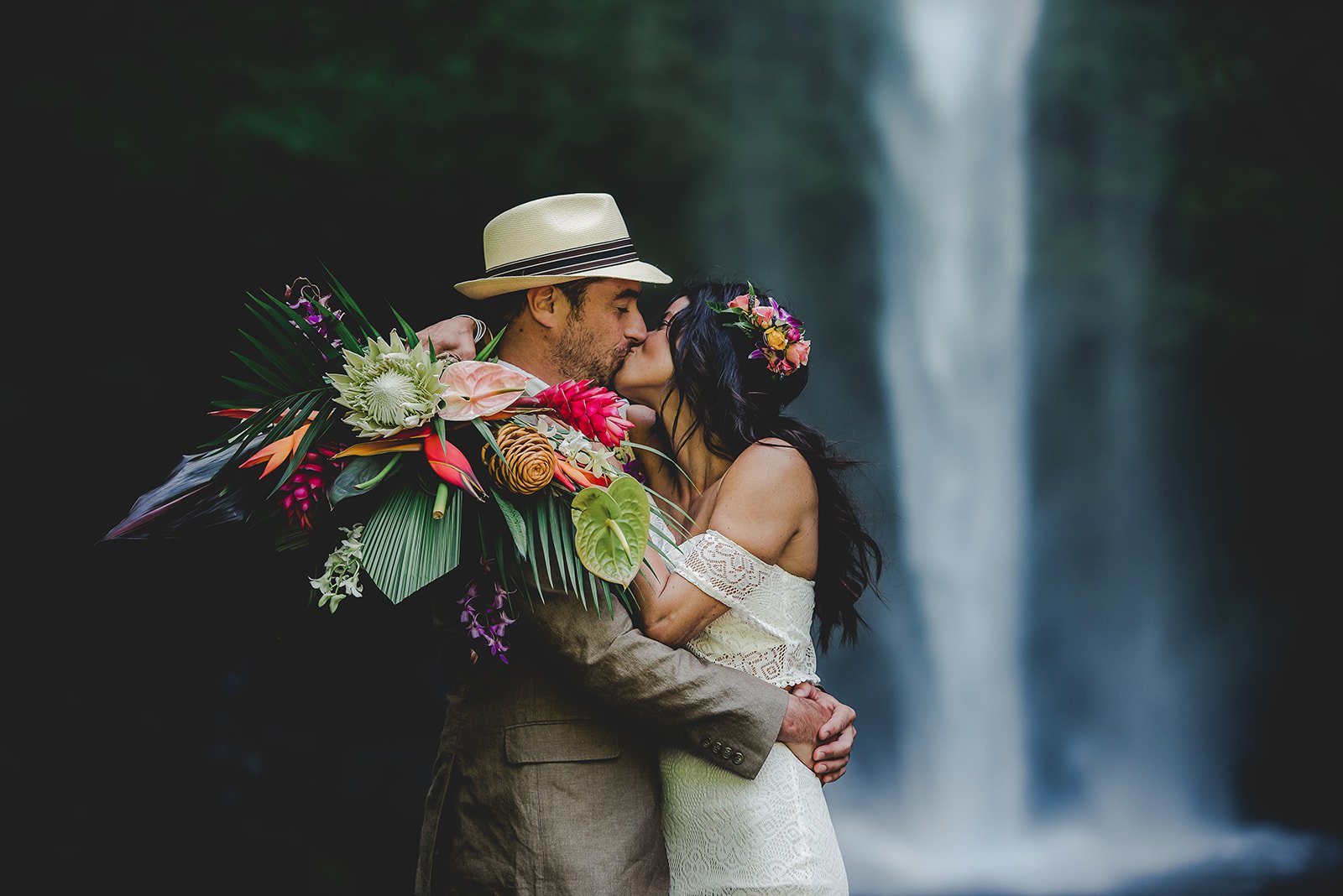
Waterfalls are the signature image most couples ask about.
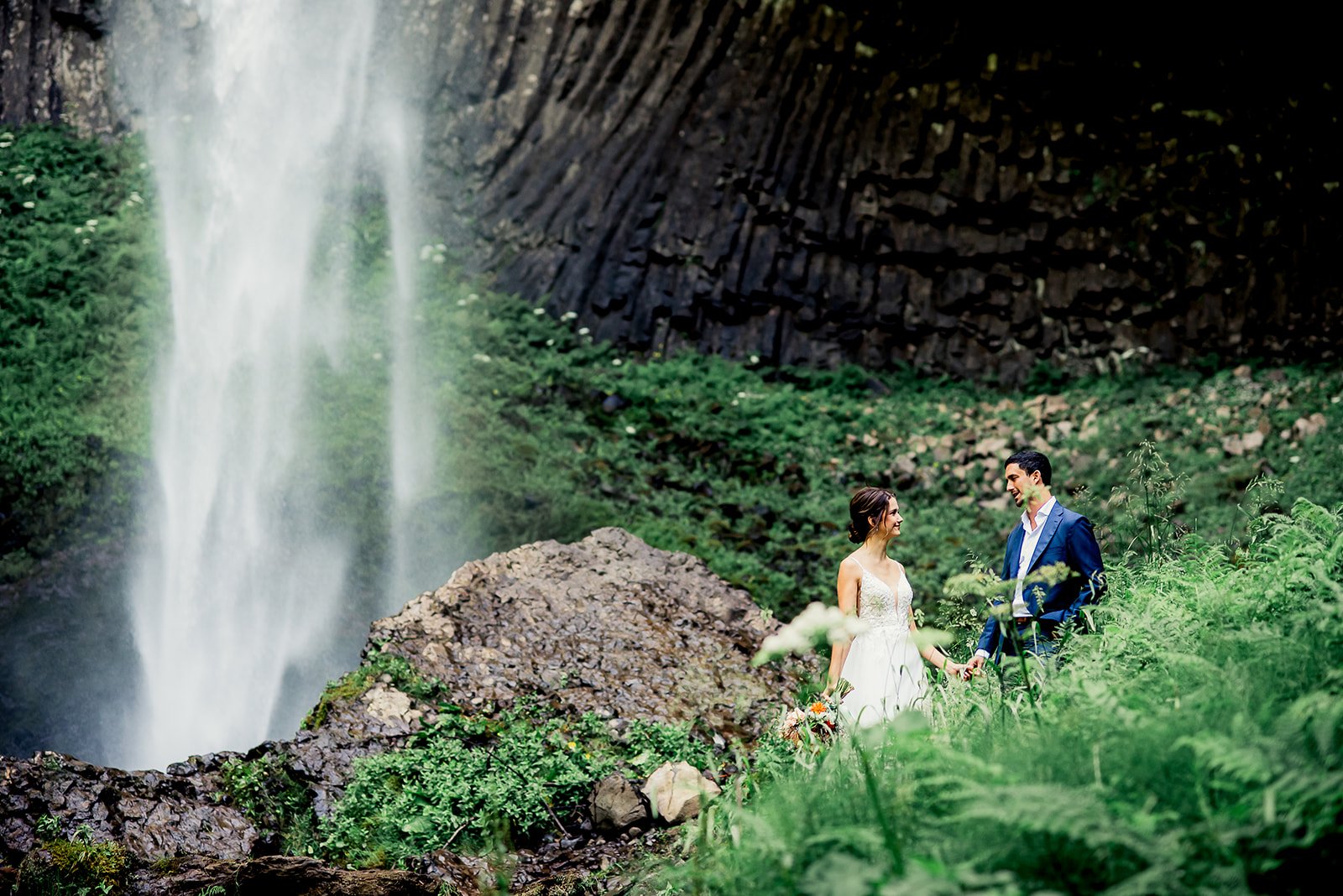
Newlywed couple standing on a mossy trail by a waterfall for gorge wedding photography portraits
Factor walking time into your timeline, especially if you plan a first look or a bridal portrait session.
A common mistake is shooting at the most crowded viewpoint at midday. Early mornings or late afternoons reduce crowds and soften harsh shadows across the water.
Cliffside and River Overlook Settings
Cliffside and overlook locations give couples a sense of scale that waterfalls cannot. Overlooks along the river frame the view from above, and open views can work well for wider portraits.
Overlooks are exposed. Wind can be strong, and dress and veil choices should account for it. Pin a lightweight veil, and build in extra time for shots where gusts might interrupt the session.
Columbia River Gorge Wedding Photography Permits and Land Rules
Permit rules in the Gorge depend on who manages the land, what kind of shoot you run, and how many people are involved. Land in the Gorge is managed by several different agencies and owners, and each may set its own rules, so a single session can cross several jurisdictions.
A practical way to sort this out is to split your locations into three groups before you book:
- Public land with no permit needed for small sessions. Many casual portrait sessions by a couple and a photographer with a small group fall in this group. The rules still prohibit disturbing vegetation, leaving the trail to set up shots, and blocking other visitors, so read the land manager's current guidance before you go.
- Public land that may require a permit. Commercial shoots, sessions with large wedding parties, props, or stands of equipment often trigger a permit requirement. Confirm with the managing agency whether your photographer's commercial work or your group size applies.
- Private property and venues. Estates, lodges, and private overlooks set their own fees, time windows, and exclusivity terms. Get these in writing as part of your venue contract.
Ask your photographer how they handle permits. Ask your photographer how they handle permits and what they know about which sites require paperwork.
Watch out: Rules for popular waterfall and overlook sites can change with trail work, seasonal closures, and parking restrictions, so check the managing agency's website or call the office within a few weeks of your date rather than relying on older guides.
Keep a copy of any permit or confirmation in your phone, and note the contact number for each managing office in your timeline document. If a site is closed on your date, that contact is the fastest route to a revised plan.
Best Time of Year for Columbia River Gorge Photos
Each season in the Gorge changes three things that matter for photography: waterfall volume, crowd levels, and light angle. Choosing a month is less about finding the single best season and more about matching those factors to your priorities.
Late winter and early spring (February through April). Spring rain and snowmelt can feed waterfall flow. Foliage is bare, which gives you clean lines and open views, but the weather is unsettled and some trails can be muddy or icy. Crowds are light on weekdays. Sunsets come earlier than in summer, so plan your portrait block accordingly.
Late spring (May and June). Wildflowers appear along many trails, and the green canopy is full. Waterfall flow varies from year to year. Weekends draw heavy crowds at the most famous falls, so arrive early or shoot on a weekday. Long daylight gives you flexibility for both a ceremony and a golden-hour session.
Summer (July and August). Flow tends to be lower in summer, and wind can pick up in the afternoon on exposed locations, so consider scheduling them for morning.
Fall (September through November). Crowds often thin after the summer peak. Light is lower and warmer, which flatters portraits, and sunset arrives earlier, so confirm times for your date and build your timeline backward from them. Rain increases, and wind can still be strong on overlooks.
Watch out: Waterfall flow varies a great deal from year to year with snowpack and rainfall, so a month that looked full in a previous season may be thin in another. Check recent conditions and visitor reports close to your date rather than relying on seasonal generalizations alone.
Build a weather backup plan that includes a covered or lower-elevation location in case of rain.
The right month depends on waterfall flow, crowd levels and light angle, which shift across the seasons.
Season | Months | Key trade-off |
|---|---|---|
Late winter and early spring | February through April | Good flow and light crowds, but unsettled weather |
Late spring | May and June | Wildflowers and full canopy, heavy weekend crowds |
Summer | July and August | Lower flow, afternoon wind on exposed sites |
Fall | September through November | Thinner crowds and warmer light, rain increases |
Planning a Columbia River Gorge Elopement Photography Day
Elopements in the Gorge work well when the plan stays simple. Choose a small number of locations, and group them by proximity to limit drive time.
Pack for changing conditions: layers, a wind-resistant jacket, and a clear plan for each location if weather turns. Budget time for the drive between sites, since the scenic highway is slower than the interstate.
Booking Your Gorge Wedding Photography Session
Book early, especially for weekends in peak season. Before you commit, ask your photographer about location experience, travel arrangements, and how they handle changing weather. Karen J Hawley Photography is available for travel.
For a wider look at how to plan the rest of your wedding, read how to choose the best Portland candid wedding photographer and 6 wedding photography packages Portland area couples should compare. Ready to talk through your location ideas? Let's chat!
Frequently Asked Questions
Do I need a permit for wedding photography in the Columbia River Gorge?
It depends on the site and the activity. Permit requirements vary by site and by the managing agency. Verify rules with the land manager for your chosen location before the day, and ask whether a commercial shoot or a group setup changes the requirement.
What are the best times of year for wedding photos in the Gorge?
Many couples plan around the shoulder seasons, when the landscape is green or golden and crowds are lighter than in peak summer. Many couples choose the shoulder seasons for greener or golden landscapes, with lighter crowds than peak summer. Plan a weather backup, since wind and rain can change plans quickly on exposed overlooks.
Can I take wedding or engagement photos at Multnomah Falls?
Popular waterfalls can be crowded, especially on weekends, so consider arriving early. Confirm current rules for commercial or ceremony-style photography with the managing agency before booking. There are many other waterfalls in the Columbia Gorge that do not require a parking permit, are less crowded and are equally as beautiful, such as Latourell Falls and Horsetail Falls. Both are easy to access and make for beautiful photos!
Are there accessible wedding photography locations in the Columbia River Gorge?
Some viewpoints and short paths in the Gorge require little walking, which can help when mobility is a concern. Check walking distances, terrain, and parking before choosing a spot, and plan for a shuttle or drop-off point if the trail is steep or uneven. A few of my favorites are Crown Point (the Vista House), Women's Forum State Park, Latourell Falls, Bridal Veil Falls, Horsetail Falls and others!