 How-to
How to Look Natural in Wedding Photos: 7 Posing Tips
Table of Contents
- How to Look Natural in Wedding Photos: 7 Posing Tips
- Why Couples Look Stiff in Wedding Photos (and What Actually Fixes It)
- How to Pose for Wedding Photos Without Looking Posed
- Tips for Camera-Shy Wedding Couples
- Psychological Grounding Techniques to Calm Nerves Before the Shoot
- Wedding Photography Engagement Session Benefits for Natural Results
- How Lighting, Outfits and Comfort Shape Natural-Looking Photos
- Booking Your Session With Karen J Hawley Photography
- Frequently Asked Questions
How to Look Natural in Wedding Photos: 7 Posing Tips
Last Updated: November 12, 2026
Why Couples Look Stiff in Wedding Photos (and What Actually Fixes It)
Most couples look stiff in their wedding photos because they feel watched, not because they lack poses, and learning how to look natural in wedding photos starts with that realization. Studio Wildlight reports that 67% of couples now prefer natural, unposed, documentary-style photography over traditional posed shots (Studio Wildlight 2026 wedding photography trends analysis).
The fix starts with a shift in thinking. Stop trying to hold a pose. Start doing something instead.
- Stiffness comes from waiting for the shutter.
- Natural photos come from moments that already exist.
- A calm photographer and a clear plan do more than any single pose.
Movement, timing and comfort decide how the final images feel. Poses are only a small part of that.
How to Pose for Wedding Photos Without Looking Posed
Good posing is less about exact positions and more about how your body feels. When you feel settled, your face and posture follow.
Karen J Hawley Photography guides couples through simple, repeatable adjustments. These work for engagement sessions and wedding days alike. The aim is ease, not perfection.
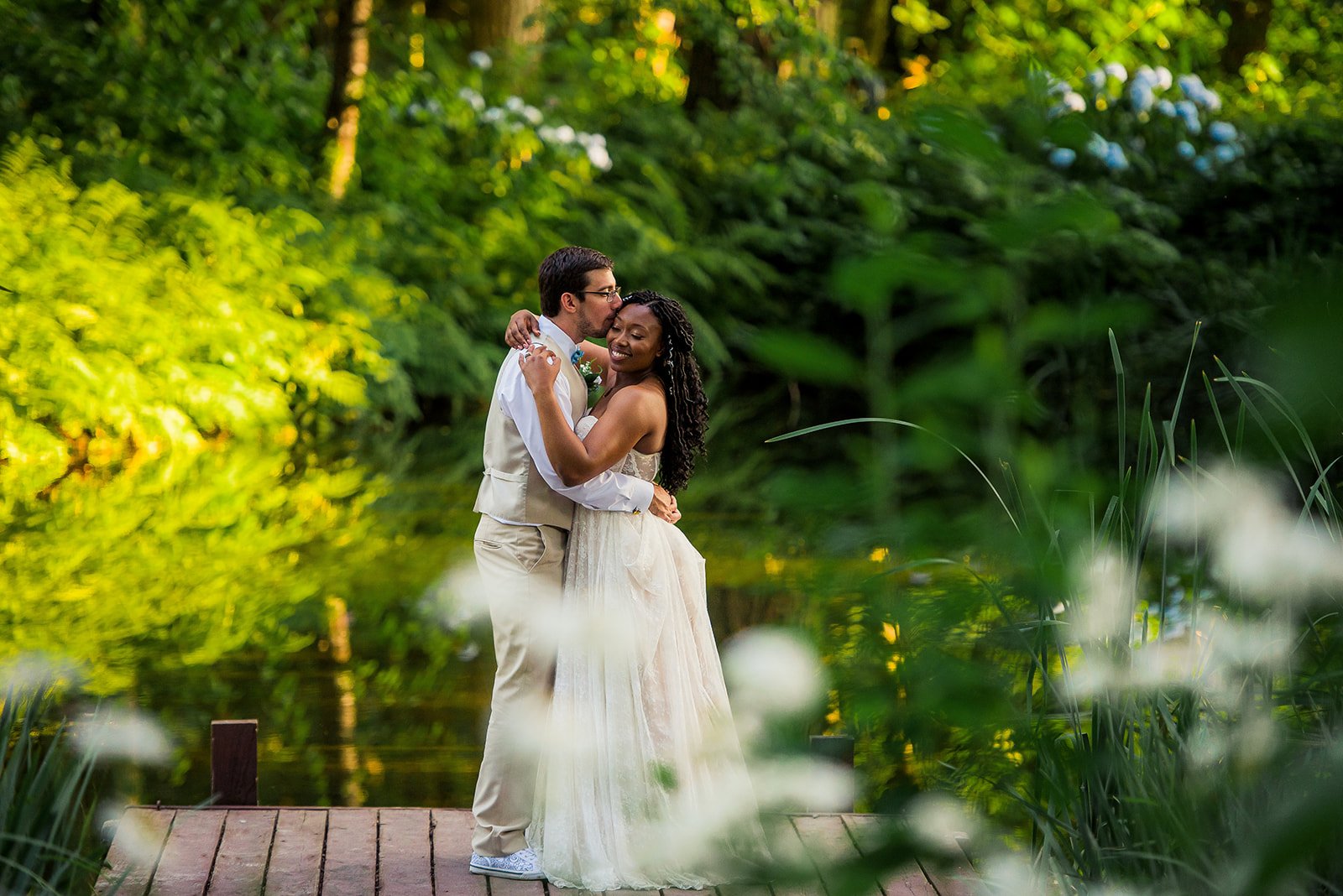
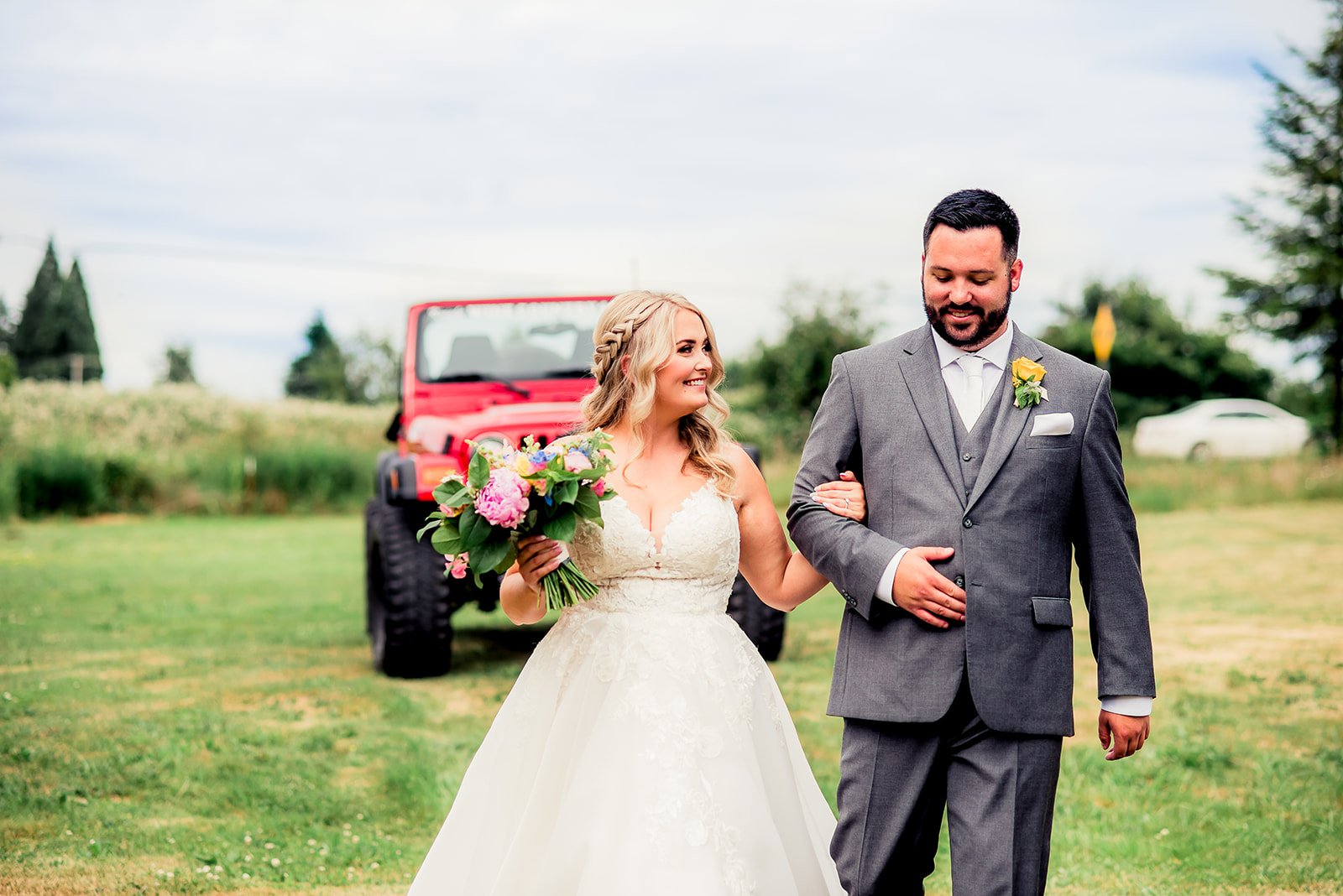
A couple laughing and walking along a tree-lined path at golden hour, showing how to look natural in wedding photos.
Hands, Shoulders and Posture
Hands cause more trouble than anything else. Stiff hands read as nervous hands.
- Let your hands rest on your partner's waist, chest or back.
- Keep fingers loose. Clenched fists show tension.
- Drop your shoulders and move your weight slightly to one foot.
Try this: take a breath, let your arms hang, and then lift them slowly. That short reset often removes the frozen look.
Using Movement Instead of Static Poses
Movement gives the camera something real to capture. Walking, turning and whispering all work well.
Efege Photography notes that photographers increasingly use movement like walking, whispering and laughing to replace forced, static poses (Efege Photography 2026 wedding posing trends). Try a short walk, a shared joke or a slow turn. These moments often produce the best frames of the session.
Tips for Camera-Shy Wedding Couples
Feeling awkward in front of a lens is common. That feeling is normal, and it can be managed with a few concrete habits.
The core problem is that camera shyness is a performance loop: you notice the lens, you tighten up, the photographer waits, and the waiting makes you more self-conscious. Breaking that loop means giving your body and brain something else to do.
Give Yourself a Job, Not a Pose
Instead of "look happy," ask your photographer for a task. Small, physical jobs pull attention away from the camera:
- Walk toward each other from 20 feet apart and stop when your hands meet.
- Whisper the worst gift you ever gave each other, then try not to laugh.
- Adjust a veil, a cufflink, or a boutonniere and let the photographer work around the fuss.
Tasks work because they occupy the part of your brain that would otherwise be monitoring your face.
Use a Countdown and a Reset
Ask your photographer to count down from three before the shutter, then let you drop the pose for five seconds between setups. That micro-break prevents the frozen smile that builds when you hold an expression too long.
Script the First Ten Minutes
Camera shyness is highest at the start. Ask your photographer to spend the first ten minutes on a walk-and-talk setup with no direct eye contact with the lens.
Watch out: do not ask your photographer to "just capture candids" for the entire session. Without any direction, camera-shy couples often default to standing still and smiling politely, which produces the exact stiffness you were trying to avoid.
Bring a Comfort Object or a Second Set of Hands
A bouquet, a jacket, a drink, or even a phone in your hand gives your fingers a default resting place.
Agree on a Signal With Your Partner
Pick a small physical cue, like a squeeze of the hand or a raised eyebrow, that means "I need a breather." Knowing you can pause the shoot without announcing it to the whole room lowers the stakes.
The goal is not to eliminate nerves. It is to give nerves somewhere to go so your face and posture can return to something that looks like you.
Camera shyness is common, and a few concrete habits can help you relax in front of the lens.
Tip | What to do | When |
|---|---|---|
Give yourself a job | Walk toward each other, whisper a joke, or adjust a veil | During the shoot |
Use a countdown and reset | Drop the pose for five seconds between setups | Between shots |
Script the first ten minutes | Walk-and-talk with no direct eye contact with the lens | Start of the session |
Bring a comfort object | Hold a bouquet, jacket, drink, or phone | Throughout |
Agree on a pause signal | Use a hand squeeze or raised eyebrow to call a breather | Whenever needed |
Psychological Grounding Techniques to Calm Nerves Before the Shoot
Nerves show up in faces and shoulders. Grounding techniques help calm the body before the camera comes out.
Try these simple steps in the 10 minutes before your session:
- Breathe slowly, counting to four on the inhale and four on the exhale.
- Name three things you can see, hear and feel around you.
- Stand barefoot or flat-footed and notice the ground under you.
- Shake out your hands and roll your shoulders.
These habits are not a cure for nerves, but they lower tension enough for natural expressions to return. Many couples use the same routine on the day itself.
Wedding Photography Engagement Session Benefits for Natural Results
An engagement session is one of the best ways to build comfort before the wedding day, but most couples treat it as a photo op rather than a rehearsal.
Think of the engagement session as a low-stakes dress rehearsal. You get the same photographer, a similar camera, and a fraction of the time pressure, which makes it the cheapest place to find out what you actually do with your hands.
What to Practice, Specifically
A rehearsal only works if you know what you are rehearsing. Bring a short list to the engagement shoot:
- The walk-and-hold. Practice walking toward the camera and stopping without locking your knees. Most stiffness shows up in the legs first.
- The hand default. Find two or three resting places for your hands, such as your partner's waist, a pocket, or a bouquet, and repeat them until they feel automatic.
- The laugh reset. Practice dropping a forced smile and letting your face go neutral on cue, so the photographer can catch the real expression that follows.
Use the Session to Learn Your Angles
Ask your photographer to show you three or four frames on the back of the camera during the shoot. You are not looking for the most flattering image; you are looking for the angle and posture that feel like you.
Test the Outfit and the Shoes
An engagement session is the best place to test the outfit logic you plan to use on the wedding day. Wear the same shoe height, a similar fabric weight, and a comparable neckline.
Watch out: do not schedule the engagement session for the same week as a big work deadline or a travel day.
Build a Shared Vocabulary With Your Photographer
The engagement session is where you and your photographer develop shorthand. By the end, you should have a few phrases that mean something specific, like "reset," "walk it out," or "give me the lean." On the wedding day, that shorthand saves time and lowers nerves because you are not learning a new language in front of 100 guests.
Know What the Session Cannot Fix
An engagement shoot will not make a camera-shy couple fully comfortable, and it will not replicate the pressure of a wedding timeline. What it does is remove the unknown. You learn how the photographer works, how long a setup takes, and what your face does when you are not thinking about it.
If you want to see what a practice shoot looks like, browse the engagement session offerings before you book.
How Lighting, Outfits and Comfort Shape Natural-Looking Photos
Light, clothing and comfort all affect how natural you look.
Lighting: Soft, directional light flatters skin and softens expressions.
Outfits: Choose clothes you can move in. Stiff fabrics and tight waistbands restrict posture.
Comfort: Wear shoes you can stand in for hours.
Preparation matters as much as the poses. When you feel physically at ease, your face relaxes too.
Booking Your Session With Karen J Hawley Photography
Karen J Hawley Photography has photographed more than 200 weddings over 12 years, and clients often describe a calm, low-key presence. One couple described the highlight images as something they were "absolutely blown away" by the next day.
Pricing depends on session length, coverage dates and delivery needs, so the best next step is to contact Karen directly for a current quote. If you are still deciding what to look for, learn how to choose the best Portland candid wedding photographer before you reach out.
If you want more help with natural posing, read how to pose for wedding photos before you book. When you are ready to compare options, 6 wedding photography packages Portland area couples should compare explains what each package includes.
Ready to talk through your day? Let's chat!
Get a natural, relaxed wedding album with Karen J Hawley Photography.
Frequently Asked Questions
What are the best ways to avoid looking stiff in wedding photos?
The most effective approach is to replace static poses with movement. Walking, turning toward each other, laughing at a shared joke, or whispering to your partner gives your body something to do, which softens posture and facial expressions. Relaxed shoulders, weight shifted onto one leg, and hands that hold something or touch your partner tend to look more natural than hands held rigidly at your sides. Working with a photographer who prompts movement rather than calling out fixed poses also makes a visible difference in how natural your wedding photos look.
How can I feel more comfortable in front of a camera?
Comfort usually builds with exposure and trust rather than forced confidence. A pre-wedding engagement session lets you practice with your photographer, learn how the camera moves around you, and find the poses and movements that feel right before the big day. Breathing slowly, focusing on your partner instead of the lens, and reminding yourself that the photographer is watching for real moments rather than perfect faces can also reduce tension. Wearing an outfit you feel good in helps as well, since physical comfort tends to show up in photos.
How do I choose a photographer who captures natural moments?
Look at full galleries rather than only highlight reels, and check whether the candid images feel relaxed and emotionally honest. Ask how the photographer guides nervous clients: a good answer describes prompts, movement and conversation rather than a single signature pose. Reviews that mention feeling comfortable during the session are valuable, and a consultation call will show whether the photographer's calm, low-key presence suits your personality.
How can introverts prepare for wedding photography?
Introverts often do best with a clear plan. Share your comfort level with your photographer ahead of time, ask for a shot list so you know what to expect, and schedule a short engagement session if you can. Choose a few specific movements you enjoy, such as walking hand in hand or sharing a quiet moment, so you are not improvising under pressure. Pricing for engagement sessions and wedding packages depends on date, coverage and delivery, so contact Karen J Hawley Photography directly for a current quote.